
Pediatric Dental Residency

Curriculum
Our program offers the opportunity for extending the resident's diagnostic ability, clinical knowledge and skills, and critical judgment. The core of the curriculum includes all subject matter indispensable to the development of a competent and inquisitive pediatric dentist. The resident will learn to work with consultants and clinicians in other dental specialties and health fields. Didactic courses, seminars and clinical experiences are provided to develop these necessary skills. Residents will learn to critically evaluate scientific literature and be expected to produce a publishable paper upon graduation.
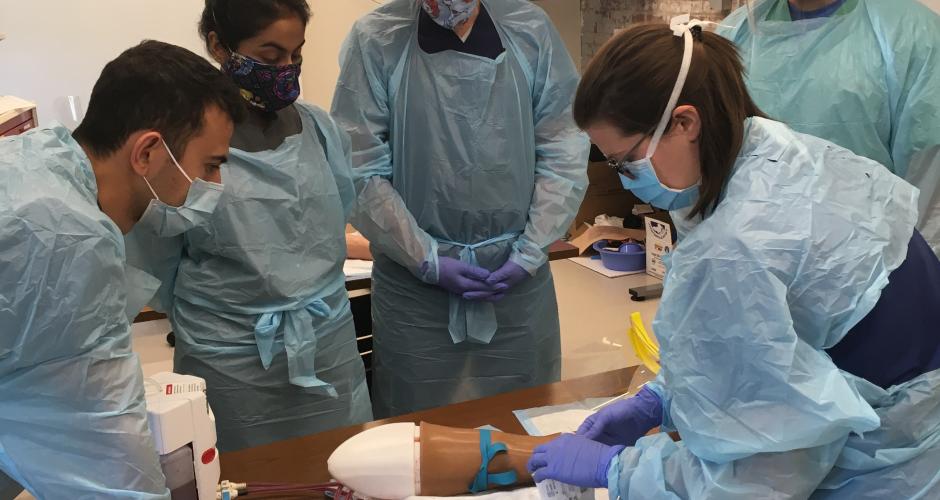
Courses focus on statistics and research design, children with special healthcare needs, restorative treatment, cariology, behavior guidance, pulp biology, traumatology, advocacy and public policy, biomechanics and limited orthodontics, and sedation. Clinical experiences are extensive and include comprehensive care, treatment of patients with special healthcare needs, emergency care, oral surgery, endodontics, orthodontics, and periodontics. Residents gain experience treating infants, children and adolescents using behavior management techniques, nitrous oxide, conscious sedation, and general anesthesia. Additionally, residents will receive additional training and rotate through a variety of services within the hospital, including anesthesia, pediatric medicine, pediatric pulmonology, hemonc, behavioral health, cardiology, otolaryngology, and craniofacial.
PGY1 & PGY2 Focus
- PGY1 Year Focus
Advanced Treatments Covered in First-Year Program:
- Operative dentistry
- Replacement of teeth using fixed or removable prosthodontics
- Periodontal therapy and endodontic therapy
- Oral surgery and pediatric dental care
- Evaluation and treatment of dental emergencies
- Pain and anxiety control techniques (behavioral and pharmacological)
Management Skills Developed in First-Year Program:
- Handling medical emergencies
- Implant management
- Management of oral and mucosal diseases
- Addressing temporomandibular disorders and orofacial pain
- Management of occlusal disorders
- PGY2 Year Focus
- Managing complex and comprehensive dental care in ambulatory and operating room settings
- Utilizing IV sedation when necessary
- Collaborating with cleft lip/cleft palate treatment teams
- Managing administrative functions within a hospital dental service and postdoctoral educational training program
- Half day/week of teaching experience during second (PGY2) year
- Didactics
- Fridays from 1 p.m. to 4:30 p.m. (occasional collaboratory Tuesday didactics)
- Pediatric sedation course
- Didactics are not scheduled during resident rotations
- Pediatric bootcamp occurs during the last two weeks of June during resident orientation, comprising foundational lectures and didactics
 Back to Top